
Airport Ground Operations Under Strain: Why Airside Capacity Is Becoming a CEO-Level Constraint
Airports are entering a more constrained operating environment. Passenger and cargo demand continue to test infrastructure, while construction cost, labor availability, airfield safety, gate availability, ground equipment, baggage systems, fueling, and aircraft-turn performance all determine whether capacity is truly available. For airport operators, ground handlers, fixed-base operators, cargo handlers, and airline partners, airside performance is no longer a back-of-house issue.
For CEOs in transportation support activities, the burning platform is that airport capacity cannot be unlocked by capital investment alone. New gates, aprons, taxiways, and terminals matter, but they create value only when the ground operation can turn aircraft safely, move bags and cargo accurately, deploy labor and equipment, and recover from disruption without losing the schedule. The airside operating model is becoming a CEO-level constraint because it determines reliability, safety, customer experience, and margin performance.
Airport capacity will not be unlocked by capital projects alone; it will be unlocked by ground operations that turn infrastructure, labor, equipment, and safety controls into reliable airside flow.
Airport Capacity Is Moving from Capital Need to Operating Constraint
The capital need is clear. Airports Council International – North America’s 2025 Airport Infrastructure Needs Study estimated that U.S. airports will require $173.9 billion in infrastructure investments over the 2025-2029 period, up 15.1% from the prior projection. The study attributes the increase to construction-cost inflation, emerging facility requirements, project complexity at site-constrained airports, and a backlog of deferred projects. That is a funding and capital planning challenge, but it is also an operating challenge.
The FAA’s 2026 Airport Improvement Program grants and the final fiscal year 2026 Airport Infrastructure Grant allocation continue to fund runways, taxiways, aprons, signage, lighting, terminals, and related airport infrastructure. Those investments are necessary, yet capacity is not created the day concrete is poured or equipment is installed. Capacity is created when aircraft, people, vehicles, gates, fueling, bags, cargo, maintenance windows, and safety controls operate through the same cadence.
For airport support leaders, the next phase is about turning funded infrastructure into usable capacity. That means aligning construction phasing with operations, protecting airfield access, coordinating tenants, sequencing ground equipment, and making sure new assets reduce bottlenecks rather than simply shifting them to the next handoff.
That is why the airport support model has to be designed before growth fully arrives. Construction teams may focus on project milestones, but operating leaders must focus on readiness milestones: when the new gate, apron, taxiway, bag system, fueling pad, or cargo facility becomes reliable enough to handle peak demand without creating new labor, safety, or service friction.
Airside Visibility and Safety Are Now Capacity Issues
Safety events on the ground can shut down capacity as quickly as weather or air traffic control constraints. In May 2026, the FAA announced a $16.5 million effort to equip about 1,900 airport vehicles across 264 airports with transponders, improving the ability of air traffic control to see vehicles on runways and taxiways. The FAA’s own release framed the action as a direct safety improvement, while public reporting connected the initiative to recent ground-safety concerns.
The implication for CEOs is that visibility is no longer a technology nice-to-have. It is part of the capacity equation. If ground vehicles, ramp crews, baggage teams, fuel trucks, maintenance teams, snow equipment, and emergency vehicles are not visible and controlled, the airport introduces risk, delay, and uncertainty into every aircraft movement.
Airside visibility must also be matched by decision discipline. Leaders need to know who has authority to release equipment, close or reopen work areas, reroute ground traffic, coordinate with tower personnel, and escalate unsafe conditions. Technology can expose the risk; operating discipline determines whether the organization acts quickly enough to prevent safety issues from becoming service and cost issues.
Ground Handling Is the Hidden Throughput Engine
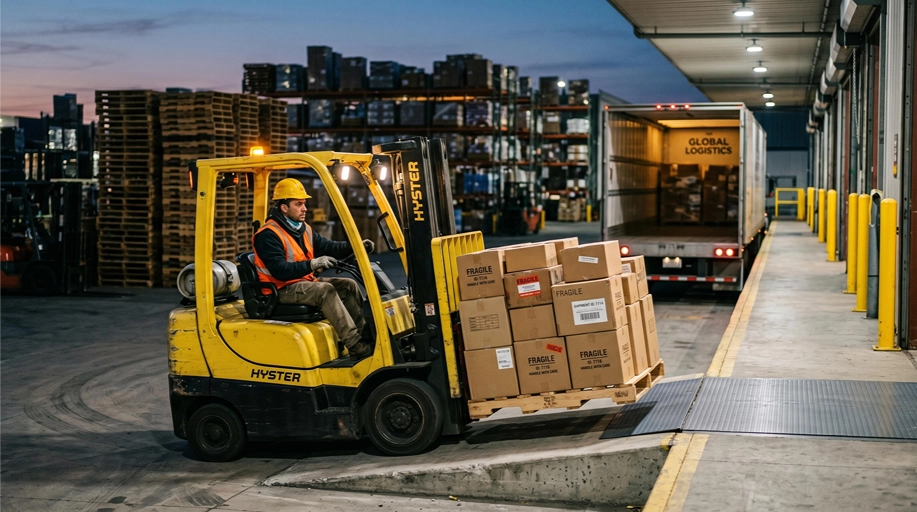
The customer sees the flight, not the ground-handling system behind it. But the operating economics of the airport depend heavily on that system. A gate can be available and an aircraft can be scheduled, yet the turn still fails if baggage crews are short, fuel sequencing is late, lavatory and catering service are delayed, a belt loader is unavailable, cargo paperwork is incomplete, or ramp coordination breaks down.
Ground handling is therefore a throughput engine. It determines whether airport capacity is converted into aircraft movements, whether airlines can protect block times, whether cargo makes its connection, and whether passengers experience the schedule that was sold. In a constrained airport environment, the value of each gate, stand, tug, belt loader, fuel truck, and trained ramp agent rises.
The management issue is that ground handling often crosses company lines. Airports, airlines, contractors, fixed-base operators, cargo handlers, fueling providers, maintenance teams, and security functions may all touch the same aircraft or movement. CEOs need an operating cadence that makes those interfaces visible. The weakest handoff often controls the turn.
The economic impact is substantial because every failed turn creates a chain of cost: crews wait, passengers misconnect, aircraft utilization falls, gates stay occupied, baggage recovery increases, and customer-service teams absorb the problem. In that environment, ground handling cannot be treated as a commodity service purchased on lowest hourly cost. It must be governed as a core throughput capability.
Labor, Equipment, and Maintenance Need One Cadence
Airside performance depends on specialized labor and reliable equipment. Short staffing, overtime, training gaps, equipment downtime, charger availability, maintenance backlog, parts shortages, and weather readiness all reduce effective capacity. A nominally staffed station may still be underprepared if the right skills are not available at the right time or the right equipment is not positioned where the work occurs.
The operating model should connect workforce planning, certification, scheduling, equipment readiness, maintenance planning, and shift supervision. That means leaders should see ramp staffing by flight bank, equipment availability by gate or zone, maintenance status by asset class, training completion by role, and performance by shift and provider. Aggregate labor and equipment counts do not show whether the operation can execute the schedule.
This is especially important as airports modernize. New facilities may require new flows, new equipment, different staffing patterns, and revised safety procedures. If those requirements are not built into the launch plan, new infrastructure can become a new bottleneck.
Disruption Recovery Starts on the Ramp
Airport disruption is often managed at the airline network or passenger-service level, but much of the recovery starts on the ramp. A weather event, delayed inbound aircraft, closed taxiway, late crew, baggage issue, ground-equipment failure, or cargo exception can cascade through gate assignments, staffing, fuel sequencing, towing, maintenance, and passenger communication.
Support operators need a recovery model that is faster than the disruption. That requires clear priorities, pre-defined escalation rules, shared visibility with airline and airport stakeholders, and practical authority at the shift level. The goal is not to eliminate every delay. The goal is to prevent local exceptions from becoming uncontrolled network cost.
CEOs should require visibility into the cost and frequency of recovery actions: missed turns, gate conflicts, baggage misconnects, late fueling, equipment shortages, ramp delays, safety holds, and recovery labor. Without that visibility, the organization may treat each event as isolated when the real problem is an operating system that cannot absorb variability.
Recovery also requires disciplined communication. Airlines, airport operations, ground handlers, fueling providers, maintenance teams, TSA or security partners, and passenger-facing staff often know different parts of the problem. If those facts are not brought together quickly, the airport loses time debating the situation instead of controlling the response.
The Brooks International Perspective
From Brooks International’s perspective, airport ground operations are an enterprise execution challenge. The airside system brings together capital assets, specialized labor, contractors, safety requirements, tenant obligations, customer expectations, and real-time disruption. Performance depends on whether leadership can control the daily operating model across those boundaries.
The highest-value improvements often come from practical management discipline: better shift routines, clearer handoffs, equipment readiness controls, gate-turn visibility, contractor accountability, safety escalation, and performance management across providers. The objective is not to add bureaucracy to a fast-moving environment. It is to give leaders the visibility and cadence to protect safety, throughput, and customer reliability at the same time.
Brooks International helps leadership teams convert complex operating environments into controlled execution systems. For airport support activities, that means turning airside infrastructure into reliable flow and ensuring that the people, equipment, procedures, and partners behind the network perform as one system.
The leadership objective should be simple: make the airport’s operating capacity visible before the schedule is at risk. That means leaders should be able to see where the operation is constrained today, what will constrain it tomorrow, and what decision is needed before the next wave of aircraft arrives.
What Infrastructure Leaders Should Be Asking Now
The leadership agenda should test whether airport support operations can convert infrastructure and demand into safe, reliable airside capacity.
• Where are ground-operation constraints most likely to limit usable capacity: gates, ramp labor, equipment, fueling, baggage, cargo, maintenance, or safety controls?
• Can leaders see turn performance, equipment availability, staffing, and safety exceptions by bank, gate, provider, and shift?
• Are capital projects being launched with operating plans that include labor, training, equipment, maintenance, and stakeholder handoffs?
• Who has authority to resolve airside exceptions quickly, and what issues require executive escalation?
• How are contractor performance, safety compliance, and service reliability governed across airport, airline, and support-provider boundaries?
• What operating indicators show whether new infrastructure is increasing throughput or simply shifting bottlenecks?
The Leadership Imperative
Airside capacity is becoming one of the most important operating constraints in aviation infrastructure. Capital investment can expand the physical envelope, but only disciplined ground operations can convert that envelope into reliable movement.
For CEOs in airport support activities, the mandate is clear: manage airside operations as critical infrastructure, not a collection of service tasks. The winners will be those that connect safety, labor, equipment, contractors, and recovery routines into a single operating system that protects reliability under pressure.