Rail Support at the Chokepoints: Why Terminal Performance Now Shapes Network Reliability
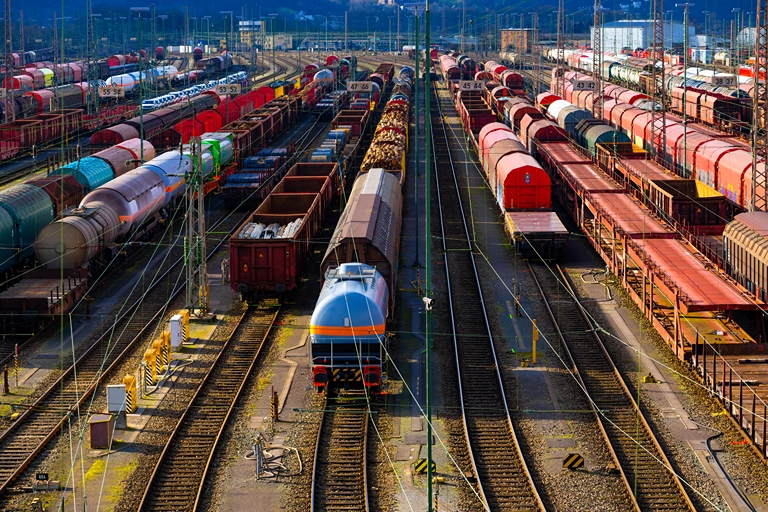
Rail support activities sit at the chokepoints of the freight network. Terminals, yards, interchanges, transload sites, intermodal ramps, maintenance support, switching operations, and customer handoffs determine whether rail volume becomes reliable service or network congestion. When the economy is soft, weak terminal performance can be masked by lower demand. When freight momentum improves, those chokepoints become visible quickly.
For CEOs in transportation support activities, the 2026 issue is that rail volumes are improving while customers, regulators, and supply-chain partners have more visibility into service performance. The operating question is no longer only whether railroads can move more freight. It is whether the terminal and support system can keep cars, containers, crews, equipment, and information moving through the network without creating dwell, missed commitments, and customer frustration.
Rail service depends on what happens at the chokepoints; terminal discipline converts volume recovery into network reliability, customer confidence, and margin performance.
Rail Volumes Are Improving, Raising the Stakes for Support Operations
The Association of American Railroads’ May 2026 Rail Industry Overview reported that, through the first five months of 2026, total carloads were at their highest level since 2019 and that intermodal volume increased 8.1% in May, its fourth straight gain. AAR also reported that the Freight Rail Index reached its highest level in 17 months, signaling improving goods-sector momentum.
The May data followed an April 2026 Rail Industry Overview that pointed to unusually broad-based freight strength, including sixteen of twenty carload categories rising and total carloads posting a fourth straight year-over-year gain. For rail support operators, this matters because volume recovery tests the parts of the network where handoffs occur.
A stronger market does not automatically create stronger service. It can expose terminal constraints, crew coordination issues, equipment imbalances, yard congestion, switching delays, and poor communication with customers. The support system needs to be ready before the volume arrives in full.
That is why support activities become more strategic as rail traffic strengthens. The line-haul network may be the visible asset, but the support system determines whether traffic is assembled, classified, transferred, inspected, lifted, released, and delivered at the pace customers expect. If support operations lag, volume recovery becomes congestion rather than growth.
Terminal Chokepoints Convert Local Delay into Network Risk
Rail networks are interconnected by design. A terminal delay can affect train makeup, car availability, crew starts, interchange timing, customer delivery, intermodal drayage, and downstream yard balance. What looks like a local issue can become network risk when cars and containers stop flowing through the chokepoint.
Terminal performance is shaped by many practical factors: yard layout, track availability, switching plans, lift capacity, hostler availability, inspection timing, maintenance windows, locomotive availability, railcar positioning, chassis and container availability, drayage coordination, and customer loading or unloading behavior. These variables cannot be managed effectively through monthly averages alone.
CEOs need to understand which terminals and handoffs constrain the network, why dwell occurs, which customers or traffic types create recurring exceptions, where equipment becomes trapped, and where local decisions create downstream cost. The terminal is not just an operating location. It is a control point for service reliability.
The most difficult chokepoints are often recurring, not random. They appear in the same terminals, at the same shift changes, around the same customers, at the same interchange points, or when specific commodities and equipment types enter the network. Leadership needs a way to separate unusual disruption from the patterns that can be engineered out of the operation.

Service Data Has Changed the Accountability Environment
The Surface Transportation Board requires Class I rail carriers to provide weekly reports containing data on rail service performance. STB says these reports give the agency and the public greater real-time visibility into Class I performance and include consolidated service-performance data. The data environment makes service performance more transparent than it used to be.
The data categories tracked by STB and related public freight indicators include train speed, terminal dwell time, cars online, and other service measures. That visibility raises the management standard for rail support activities. Terminal performance is increasingly measurable not only internally, but also by customers, regulators, and public observers who can see patterns in service and congestion.
For leadership teams, the point is not simply to report better metrics. The point is to use service data to manage better. Dwell, velocity, car availability, and interchange performance should trigger operating decisions: where to add labor, where to change sequencing, where to rebalance equipment, where to escalate customer behavior, and where to redesign handoffs.
Public service data also changes conversations with customers. When dwell, velocity, and car availability are visible, customers can compare promises to observed performance. Support operators need to be prepared not only to explain the numbers, but to show what operating actions are being taken to improve them.
Intermodal Handoffs Require Shared Execution Discipline
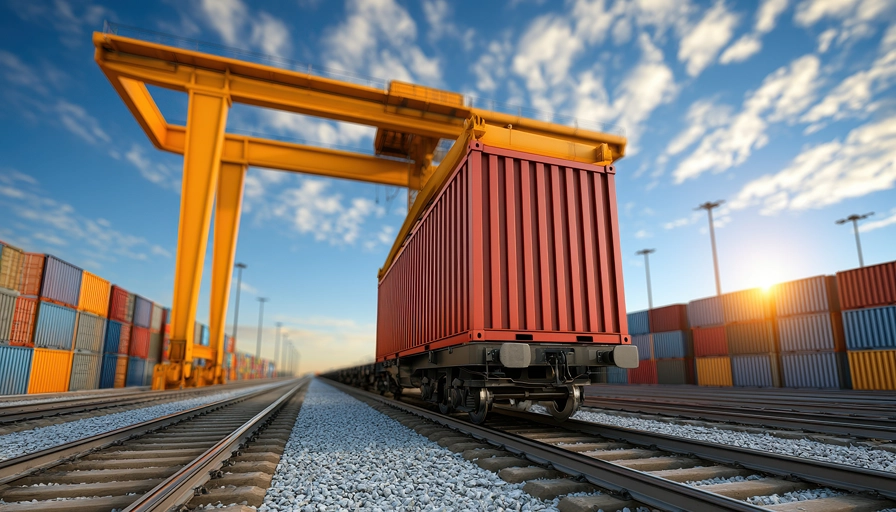
Intermodal volume growth creates opportunity, but it also increases the number of handoffs. Containers and trailers move between railroads, terminals, drayage providers, warehouses, ports, distribution centers, and customers. Each handoff depends on appointment discipline, chassis availability, lift performance, gate processes, documentation, cutoffs, and customer communication.
When intermodal ramps run well, they turn rail into a reliable part of a broader supply-chain solution. When they run poorly, they create dwell, missed pickups, demurrage, customer complaints, drayage inefficiency, and warehouse disruption. The customer often experiences the failure as one logistics problem, even if the root cause sits across several organizations.
The strongest support operators will build shared operating routines with carriers, drayage partners, ports, warehouses, and major customers. That means common exception definitions, operating calendars, cutoff discipline, performance reviews, and clear escalation paths. Intermodal growth requires more than volume handling. It requires handoff management.
This is especially important where rail touches ports and warehouses. A rail ramp that misses cutoffs can create port yard pressure, drayage inefficiency, warehouse labor rescheduling, and inventory uncertainty. The support operator may not own every piece of the chain, but it often controls the handoff that determines whether the rest of the chain can recover.
Interchange discipline is another critical test. When cars, containers, or crews are not ready at the promised handoff point, the delay rarely stays local. It can affect the receiving carrier, the drayage plan, the consignee’s labor schedule, and the next equipment cycle. Strong support operations treat interchange performance as a shared operating commitment, not a downstream consequence.
Labor and Equipment Must Be Managed as Capacity
Rail support is a specialized labor and asset business. Yardmasters, crews, mechanics, equipment operators, clerks, supervisors, hostlers, lift operators, maintenance teams, and dispatch functions determine whether terminal plans become actual movement. Equipment availability matters just as much: locomotives, railcars, cranes, reach stackers, chassis, containers, inspection tools, and maintenance support all shape usable capacity.
The operating risk is that nominal capacity does not equal effective capacity. A terminal may have assets on site but still be constrained by shift coverage, maintenance backlog, skill mix, track availability, inspection delays, or poor sequencing. As rail volumes strengthen, those hidden constraints surface faster.
CEOs should manage labor and equipment as live capacity inputs. That requires visibility by terminal, shift, asset class, work type, and bottleneck. It also requires a management cadence that connects planning, operations, maintenance, customer service, and commercial commitments so the terminal does not accept volume that it cannot execute reliably.
Managing labor and equipment as capacity also requires better supervisor routines. Frontline leaders need clear standards for start-of-shift planning, car and equipment prioritization, handoff review, exception escalation, and end-of-shift learning. Without that cadence, performance depends too heavily on individual experience and informal workarounds.
The Brooks International Perspective
From Brooks International’s perspective, rail support performance is a management-system issue. The terminal is where strategy, customer commitments, network planning, labor, equipment, safety, and maintenance become physical execution. If leadership cannot see and control the work at that level, service risk will eventually show up in the network.
The highest-value improvements often come from practical operating discipline: dwell reduction, yard planning, equipment positioning, maintenance readiness, crew and labor coordination, customer exception management, and daily performance review. These routines help convert volume recovery into service reliability rather than congestion.
Brooks International helps leadership teams build the visibility, accountability, and cadence required to control complex support operations. For rail support activities, that means treating terminals and handoffs as strategic control points, not merely local facilities.
The leadership goal is to make chokepoint performance controllable. That does not mean every delay disappears. It means the enterprise knows where delays originate, which ones matter most, who owns the response, and what has to change so the same problem does not repeat every week.

What Infrastructure Leaders Should Be Asking Now
The leadership agenda should focus on whether rail support activities can convert improving volume into reliable network performance.
• Which terminals, yards, ramps, interchanges, or customer handoffs create the most dwell, missed commitments, or recovery cost?
• Can leaders see service performance by terminal, shift, traffic type, customer, equipment pool, and exception category?
• Where does equipment become trapped, underutilized, or unavailable when volume changes?
• Are labor, maintenance, yard planning, and customer service operating through one daily cadence?
• How are STB-visible service measures used internally to trigger corrective action, not only to report performance?
• Do intermodal partners share definitions, cutoffs, escalation paths, and operating reviews for recurring exceptions?
The Leadership Imperative
Rail’s improving freight momentum will raise expectations for service reliability. That creates opportunity for support operators, but it also raises the cost of weak terminal discipline. The next constraint may not be line-haul capacity alone; it may be the yard, ramp, interchange, or handoff that keeps freight from flowing.
For CEOs in rail support activities, the mandate is clear: manage terminal performance as a strategic lever. Volume recovery creates value only when chokepoints are controlled, handoffs are reliable, and service data are converted into daily operating action.