
Service Consistency Under Pressure: The Hotel Operating Model Behind Guest Trust
Accommodation leaders are operating in a hotel market that is improving, but not improving enough to let execution drift. CBRE reported that U.S. hotel occupancy increased 0.8% year over year in the first quarter of 2026, while ADR rose 2.2% and RevPAR grew 3.8%. Demand growth outpaced supply growth, but occupancy remained below 2019 levels for every location type except interstate hotels.
At the same time, CoStar/STR’s first 2026 forecast projected full-year U.S. RevPAR growth of only 0.6%, following a turbulent 2025 in which RevPAR fell 0.3%, described as the first non-recessionary RevPAR decline ever recorded in the U.S. hotel industry. In that environment, accommodation companies cannot rely on revenue momentum alone. The operating challenge is whether they can deliver consistent guest trust while costs, labor, service expectations, and demand mix remain uneven.
In a modest-growth hotel market, guest trust is won or lost through consistent execution across every property, shift, room, and service interaction.
Modest RevPAR Growth Raises the Standard for Execution
Hotels are not facing a collapse in demand. They are facing a more selective and less forgiving demand environment. CBRE’s Q1 2026 figures show RevPAR growth, but they also show that the recovery is uneven. San Francisco surged because of AI-sector corporate travel, while other markets lagged and some location types remained below pre-pandemic occupancy levels. CoStar/STR pointed to consumer bifurcation, softer select-service and economy performance, and continued macro uncertainty as important 2026 headwinds.
For hotel CEOs, that creates a practical performance test. When RevPAR growth is modest, margin cannot be protected by rate alone. Every property must manage room readiness, housekeeping, front desk execution, maintenance response, F&B consistency, procurement, energy, and guest recovery with greater discipline. A small service miss can erode reviews, loyalty, brand trust, and repeat demand. A small labor or maintenance inefficiency can consume the benefit of rate improvement.
This is especially true for hotel groups operating across segments, markets, and ownership structures. A luxury urban property, a select-service suburban hotel, an airport property, a resort, and an extended-stay asset each require different operating rhythms. But the enterprise still needs a consistent management system that makes performance visible and correctable.
The operating issue is not whether hotels know what brand standards should be. The issue is whether those standards are executed predictably when occupancy, group demand, labor availability, maintenance load, and guest expectations change week to week.
Guest Trust Is Built Through Operational Consistency
Hotel guests experience the brand through a sequence of operational moments: reservation accuracy, arrival, check-in, room condition, housekeeping, amenities, food and beverage, digital service, issue resolution, and departure. Each moment has an owner. Each moment depends on coordination. Each moment affects trust.
The challenge is that many of the most important service outcomes are created behind the scenes. Room readiness depends on housekeeping assignments, laundry flow, maintenance clearance, inspection routines, and front-desk communication. Guest recovery depends on escalation standards, empowerment, staffing, and manager follow-through. F&B performance depends on purchasing, staffing, menu execution, kitchen flow, and event planning. Maintenance response depends on preventive routines, parts availability, vendor responsiveness, and visibility into recurring issues.
When these processes are fragmented, hotels often compensate with heroics. The best associates fix problems after they occur. Managers step in to rescue the shift. Properties absorb avoidable cost to preserve the guest experience. That may work in isolated moments, but it does not scale across a portfolio.
A stronger model makes service consistency controllable. It defines the standards, measures the leading indicators, synchronizes departments, and gives property and regional leaders the cadence to see constraints before they become guest-facing failures.
Labor Pressure Is a Service Design Issue
Labor remains central to hotel performance, but the most effective response is not simply adding more hours. AHLA’s 2025 hotel staffing survey found that 71% of surveyed hotels had job openings they were unable to fill despite active searches, with properties trying to fill six to seven positions on average. Housekeeping was the most frequently cited shortage, followed by front desk, culinary, and maintenance roles. CBRE’s Q1 2026 report showed job openings per hotel fell to 14 in February, down 9% year over year and from 2019 levels, suggesting some easing but not an end to the labor challenge.
The issue for hotel leaders is how labor is designed, deployed, and managed against demand. Static staffing models can create both overstaffing and service gaps. Properties may carry labor where it is not needed while still failing to cover check-in peaks, room-turn pressure, banquet demand, or maintenance spikes. In a modest-growth market, that inconsistency is costly.
Hotels need labor models that are aligned to actual service requirements: arrival patterns, stayover demand, room mix, group schedules, amenity usage, F&B covers, event calendars, maintenance backlog, and brand standards. They also need managers with daily routines that translate demand forecasts into assignments, priorities, and accountability.
Avoiding the word productivity does not make the issue less important. The CEO-level question is whether the organization can deliver a consistent guest experience with the right work, at the right time, by the right team, across every property in the portfolio.
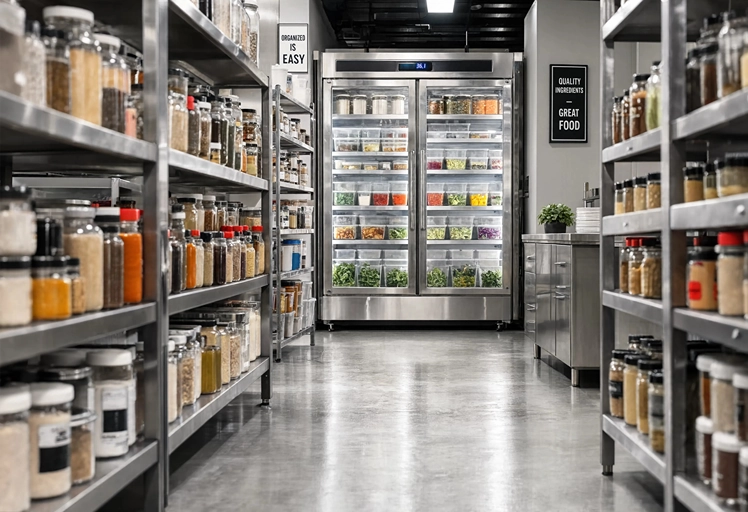
The Brooks International Perspective
From Brooks International’s perspective, service consistency is an operating-model issue. Accommodation companies do not create guest trust through brand standards alone. They create it through the routines that make those standards executable in every property, every shift, and every guest interaction.
Brooks International’s lens is to connect guest experience, labor deployment, maintenance execution, room readiness, F&B operations, procurement, and property-level financial performance into one management system. The goal is not to cut service. It is to make service more reliable, more visible, and more controllable while protecting margin and cash generation.
The highest-value opportunities often sit inside the property operating system: reducing avoidable room delays, improving handoffs between housekeeping and front desk, strengthening maintenance response, aligning staffing to demand patterns, standardizing issue escalation, improving vendor accountability, and giving regional leaders better visibility into where execution is breaking down.
This matters because hotel performance is cumulative. A missed room inspection, delayed repair, understaffed desk, unavailable amenity, or inconsistent breakfast experience may look operationally small, but across a portfolio, those failures become brand dilution, labor waste, guest dissatisfaction, and margin leakage.
What Hospitality & Leisure Leaders Should Be Asking Now
The immediate leadership agenda should focus on whether strategy, guest experience, revenue quality, and operating capability are being managed as one performance system:
- Where are service standards most inconsistent across the portfolio, and what operational constraints are causing the variation?
- Can property leaders see room readiness, housekeeping status, maintenance backlog, guest recovery, and staffing risk early enough to act?
- Are labor schedules tied to actual demand patterns, service requirements, group activity, and room mix rather than historical assumptions?
- Which guest-facing failures are recurring because of upstream breakdowns in planning, communication, parts, laundry, inspection, or vendor execution?
- Do regional and corporate leaders have a cadence that connects guest experience, property operations, and financial performance?
- Can the organization protect margin without reducing the service consistency required to preserve brand trust?
These questions matter because Hospitality & Leisure performance is no longer determined by demand alone. It is determined by the organization’s ability to execute consistently across brands, properties, venues, locations, channels, and operating constraints.
The Leadership Imperative
Hotel leaders are managing through a period where demand exists, but pricing power and volume growth cannot be assumed. RevPAR gains are modest, consumer behavior is uneven, labor remains a constraint, and guest expectations continue to rise.
In that environment, the advantage shifts to operators that can deliver consistency at scale. The best accommodation companies will not simply manage labor tighter or push rate harder. They will build operating systems that make room readiness, service standards, maintenance response, guest recovery, and property economics more predictable.
For CEOs and boards, the mandate is to move beyond property-by-property firefighting and build a management cadence that can identify performance variation, remove barriers, and sustain standards across the portfolio.
Guest trust is not created by strategy documents. It is earned through daily execution. In the next phase of hotel performance, the brands that win will be those that make that execution repeatable.