
Value, Speed, and Margin: The Global Restaurant Brand Execution Test
Foodservice demand remains resilient, but large restaurant platforms are managing a more difficult operating equation. The National Restaurant Association projects U.S. restaurant and foodservice sales of $1.55 trillion in 2026, with real inflation-adjusted gains of 1.3%. The sector is still essential to consumer life, but operators are facing persistent cost increases, a value-seeking customer, and complex service models across dine-in, drive-thru, delivery, mobile order, catering, and loyalty channels.
For a CEO leading hundreds of locations across regions or countries, the challenge is not how one restaurant improves food cost or labor scheduling. It is how the enterprise delivers a consistent brand promise across formats, franchise partners, labor markets, suppliers, menus, technologies, and customer expectations. McDonald’s 2026 McDonald’s > NEXT strategy is a useful signal of where the industry is moving: the company is emphasizing automation, hospitality standards, food quality, social media, and making restaurants easier to run and more enjoyable to visit.
For global restaurant brands, the next advantage is not just traffic growth; it is the ability to deliver value, speed, and margin through an operating model that is easier to run at scale.
Value Pressure Is Now an Enterprise Execution Problem
The restaurant value conversation has moved beyond discounting. Consumers are still spending, but they are more selective, more price-aware, and more likely to judge whether a visit feels worth the money. Reuters reported that McDonald’s launched McDonald’s > NEXT after lower-income consumers cut back on restaurant visits following years of higher prices; UBS Evidence Labs surveys shared with Reuters showed the share of U.S. customers saying McDonald’s offers good value fell from 55% to roughly 40% between 2020 and 2024 and had largely stayed there since.
That matters because value strategy can create operational strain. A value meal, limited-time offer, app promotion, or bundled menu item can drive traffic, but it can also increase kitchen complexity, packaging needs, ingredient volatility, training requirements, service-time pressure, and franchisee tension. If the operating model is not designed to absorb the offer, value can protect revenue while eroding margin and consistency.
Large restaurant platforms therefore need a different question: Which value moves are executable across the system? A promotion that works in one region may fail elsewhere because of labor cost, equipment capacity, menu mix, supply availability, or local consumer behavior. The CEO-level issue is not just whether value attracts customers. It is whether value can be delivered repeatedly, profitably, and with the same brand experience across hundreds of locations.
This is where global restaurant brands must connect commercial strategy to operating reality. Menu architecture, price points, promotional cadence, kitchen flow, equipment capacity, digital ordering, franchise economics, training, and supply chain must be evaluated together before a value strategy reaches the field.
Speed Is a Brand Promise and a Capacity Constraint
Speed has always mattered in quick-service and casual dining, but the operating definition of speed has expanded. It now includes drive-thru throughput, mobile order readiness, delivery handoffs, front-counter timing, kitchen production flow, order accuracy, table turn, catering readiness, and digital issue resolution. A customer may never see the complexity behind the promise, but the brand absorbs the impact when speed fails.
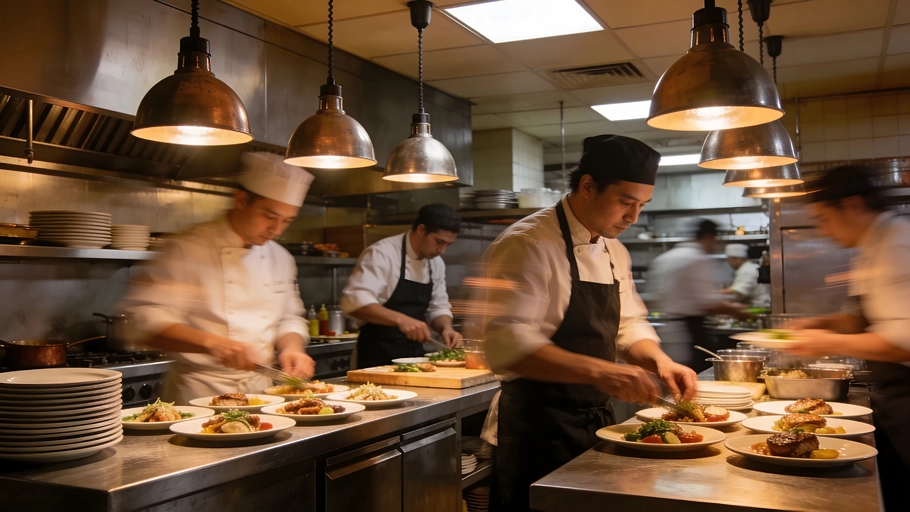
For multi-unit and global restaurant companies, speed is not achieved by telling locations to move faster. It is designed through the system. Menu complexity, station layout, order sequencing, staffing models, equipment uptime, training, supplier performance, packaging, technology integration, and manager routines all determine whether the brand can execute quickly under pressure.
McDonald’s > NEXT is notable because it explicitly connects growth with making restaurants easier to run. Reuters reported that the strategy focuses on increasing automation, raising hospitality standards, leaning on social media for marketing, and improving core food quality. That combination reflects a broader industry truth: the best brands are trying to simplify execution while improving the customer experience.
The implication for CEOs is clear. Speed is not merely a frontline metric. It is an enterprise design standard. The brand must know which processes create drag, which menu items or channels create bottlenecks, which technologies reduce complexity, and which field routines allow managers to see performance before peak periods become failures.
Global Scale Magnifies Small Operating Variations
A one-minute service delay, an inconsistent build, a missed prep standard, a stockout, or a poorly executed promotion may look minor at the store level. Across 300 locations, those issues become material. They affect labor, food waste, throughput, customer satisfaction, franchisee profitability, app ratings, delivery-platform performance, and brand trust.
Scale creates leverage, but only if the operating model is controlled. Large restaurant brands must manage corporate-owned stores, franchisees, regional operators, local suppliers, national suppliers, labor laws, menu localization, real estate formats, and technology platforms. Each layer adds variation. Without a strong management system, the brand becomes dependent on local heroics and after-the-fact reporting.
The most effective restaurant platforms turn standards into routines. They define what great execution looks like, measure leading indicators, coach field leaders, simplify tasks, escalate constraints, and connect performance data to daily action. This is not about centralizing everything. It is about creating enough structure for local teams to execute consistently while still adapting to market realities.
Franchise systems make this even more important. The franchisor may set the strategy, but franchisee economics determine whether the strategy can scale. If value offers, menu complexity, digital investments, or service standards make restaurants harder to run, the system loses alignment. The enterprise needs a clear view of how each strategic move affects operators on the ground.
The Brooks International Perspective
From Brooks International’s perspective, the global restaurant brand execution test is about making strategy executable at the unit level without losing enterprise control. Value, speed, and margin are not separate agendas. They are connected outcomes of the same operating model.
Brooks International’s lens is to help leaders translate commercial priorities into repeatable execution: simplified work, clear standards, stronger field cadence, better labor deployment, tighter menu and promotion governance, improved supply reliability, faster issue escalation, and performance visibility that connects the restaurant, region, franchise system, and corporate leadership team.
The highest-value opportunities often sit in the friction between strategy and execution. A promotion creates demand but strains the kitchen. A digital channel grows sales but disrupts order sequencing. A menu innovation creates excitement but adds training burden and inventory risk. A service standard improves guest experience but fails without staffing logic and manager routines. Brooks International focuses on closing those gaps so growth does not become complexity.
For a 300-location global restaurant platform, the operating model must make the business easier to run. That does not mean less ambitious. It means fewer avoidable exceptions, clearer priorities, more reliable routines, stronger accountability, and faster conversion of enterprise strategy into restaurant-level performance.
What Hospitality & Leisure Leaders Should Be Asking Now
The immediate leadership agenda should focus on whether strategy, guest experience, revenue quality, and operating capability are being managed as one performance system:
- Which parts of the value strategy are driving profitable traffic, and which are creating operational complexity or franchisee margin pressure?
- Where do menu items, promotions, digital channels, or service standards make restaurants harder to run than they need to be?
- Can leadership see service speed, order accuracy, food cost, labor deployment, training completion, equipment uptime, and guest experience by market and format?
- Are field leaders equipped with the routines and decision rights required to correct execution issues before they affect brand trust?
- How are suppliers, franchisees, technology teams, marketing, operations, and finance aligned before major menu or value initiatives reach the restaurant?
- Does the operating model help every location deliver value, speed, and margin, or does it depend on local heroics to make the strategy work?
These questions matter because Hospitality & Leisure performance is no longer determined by demand alone. It is determined by the organization’s ability to execute consistently across brands, properties, venues, locations, channels, and operating constraints.
The Leadership Imperative
Foodservice growth remains available, but the winners will be the brands that can deliver value without margin erosion, speed without chaos, and consistency without overburdening the field. The CEO mandate is to make the restaurant system easier to run while making the customer experience more compelling.
That requires more than menu innovation, technology, or promotions. It requires an operating model that connects pricing, menu architecture, labor, kitchen flow, equipment, supply chain, franchise economics, training, and field leadership into one execution system.
The most successful global restaurant brands will not be those that ask every location to do more. They will be those that design the work better, simplify what creates drag, and build the routines that allow every location to execute the brand promise with discipline.
For CEOs and boards, the question is not whether customers still want restaurants. They do. The question is whether the enterprise can serve them with value, speed, and margin at scale.