
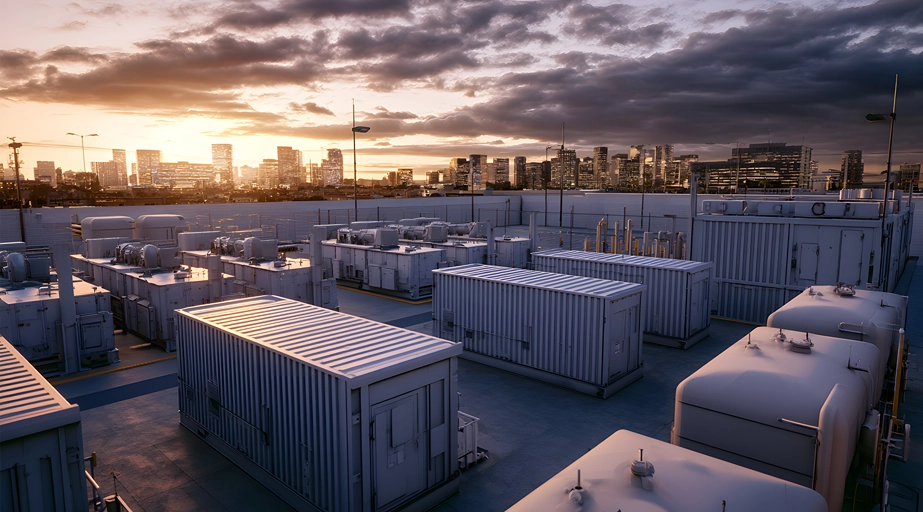
Powering the AI Economy: The Grid Capacity Mandate for Utilities
The Power & Utilities sector is entering a fundamentally different demand environment. For years, many utilities planned around modest load growth, predictable customer demand, and long-cycle infrastructure expansion. That planning model is being overtaken by a new reality: electricity demand is no longer growing gradually, and the largest new loads are arriving faster than the grid was designed to absorb.
Data centers, artificial intelligence, advanced manufacturing, electrification, transportation, cooling demand, and industrial reshoring are changing the shape of utility planning. The U.S. Energy Information Administration has projected U.S. electricity demand to move from a record 4,195 billion kWh in 2025 to 4,248 billion kWh in 2026 and 4,379 billion kWh in 2027, with AI-related power use among the drivers. Deloitte has also noted that U.S. peak demand could grow by approximately 26% by 2035, testing today’s grid limits.
For utility leaders, the strategic question has changed.
It is no longer simply: How do we add more generation? It is: Can we expand the grid, integrate new resources, connect large loads, and preserve reliability quickly enough to support the next era of economic growth?
Data center growth, renewable integration, and the return of nuclear are forcing utilities to solve a new execution challenge: delivering capacity, reliability, and speed at the same time.
Data Centers Are Turning Grid Capacity into a Competitive Advantage
Data centers are not just another customer class. They are becoming strategic anchor loads that influence regional competitiveness, economic development, regulatory priorities, capital investment, interconnection planning, and generation strategy.
The International Energy Agency reported that data center electricity use increased 17% in 2025, while AI-focused data centers grew even faster, significantly outpacing the roughly 3% growth in global electricity demand. That mismatch is important. The digital economy is scaling in months. Utility infrastructure still scales in years.
In major data center regions, the pressure is already visible. EIA has reported that PJM expects the Dominion zone, which covers Virginia and includes the world’s largest concentration of data centers, to experience the largest absolute increase in summer peak demand from 2026 through 2030, largely because of data center load growth.
This creates both opportunity and risk. Utilities that can provide reliable, cost-effective, and timely capacity will be better positioned to support economic growth. Utilities that cannot may see development delayed, constrained, or redirected to other regions.
The issue is not whether demand exists. The issue is whether the utility operating model can turn demand into energized capacity.
The Grid, Not the Market, Is Becoming the Constraint
The current challenge is not a lack of customer interest. It is the physical and organizational ability to deliver power where, when, and how it is needed.
Transmission constraints, distribution bottlenecks, interconnection delays, transformer and equipment lead times, permitting requirements, outage coordination, workforce availability, and capital project execution are all becoming limiting factors. The IEA’s 2026 electricity analysis states that grids are emerging as a bottleneck for connecting supply, demand, and storage, while grid technologies and regulatory reforms will be needed to unlock capacity.
This is the new operating reality for Power & Utilities leaders: grid capacity is now a business constraint, a reliability constraint, and an economic development constraint.
For utilities, the highest-value question is not only how much capital will be invested. It is how effectively that capital is converted into operational capacity.
Capital plans do not serve load. Energized assets do.
Renewables and Storage Must Be Integrated, Not Merely Added
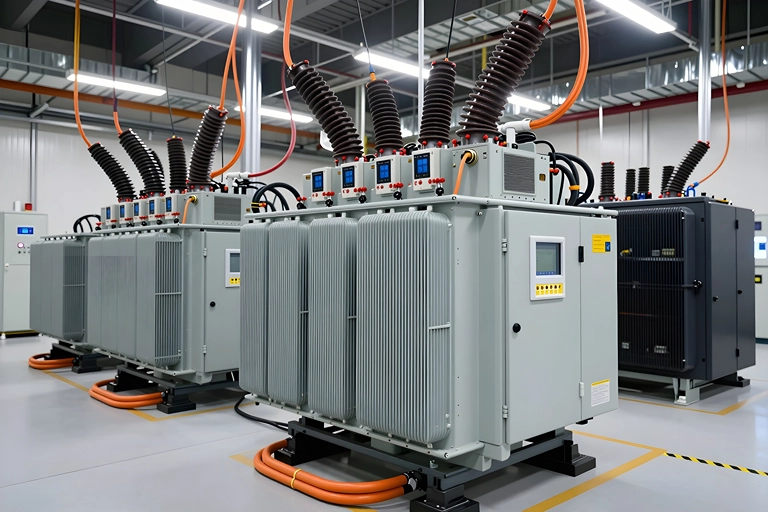
Renewable generation remains central to the future power system, but the challenge is shifting from procurement to integration. Solar, wind, and storage can help meet rising demand, but only when they are supported by transmission expansion, dispatch coordination, forecasting capability, grid modernization, and disciplined operating routines.
Storage is becoming especially important as demand grows and load profiles become less predictable. Reuters reported that U.S. energy storage developers installed a first-quarter record 9.7 GWh of capacity in Q1 2026, up 32% year over year, with data center demand, electricity price volatility, and gas supply disruptions among the contributing factors.
For utilities, this reinforces a critical execution point: renewable and storage investments only create full value when they improve system reliability, reduce congestion, manage peak demand, and support customer commitments.
Adding assets is not the same as integrating them.
Nuclear Is Returning to the Center of the Firm Power Conversation
As data center demand accelerates and renewable penetration increases, firm power is becoming more strategically important. Nuclear energy is reemerging in the conversation because it can provide large-scale, around-the-clock generation with low operating emissions.
The IEA has noted that nuclear power is expected to play a significant role in meeting U.S. data center electricity demand, particularly after 2030 when the first small modular reactors are expected to be commissioned. Technology companies have also announced plans to finance more than 20 GW of SMRs to date. Reuters has separately reported that the U.S. is targeting 5 GW of additional nuclear output by 2029 through low-cost financing focused on existing reactors and restarts.
This does not make nuclear a simple solution. Existing nuclear fleets require disciplined outage management, maintenance execution, regulatory precision, workforce capability, and reliability-centered operations. New nuclear and SMR development will require capital discipline, supply chain readiness, licensing coordination, project governance, and stakeholder alignment.
The strategic attraction is clear: utilities and large-load customers need dependable power that can support rising demand while also advancing decarbonization goals. The execution challenge is equally clear: nuclear value is realized only when projects, assets, and operations are managed with precision.
The Brooks International Perspective
From Brooks International’s perspective, the Power & Utilities sector is facing an execution-capacity challenge.
The demand signal is clear. The strategic direction is clear. The capital need is clear. What is less certain is whether utilities have the operating model required to deliver capacity at the speed now required.
In this environment, value creation depends on the organization’s ability to connect executive intent to field execution. Utilities must be able to identify constraints, prioritize the highest-value work, improve capital project throughput, strengthen outage and maintenance execution, increase contractor productivity, and coordinate planning across generation, transmission, distribution, regulatory, procurement, and customer commitments.
The most important performance opportunities will often be found inside the operating system itself:
- Improving the speed and certainty of interconnection execution.
- Reducing capital project slippage and rework.
- Improving field productivity and contractor accountability.
- Accelerating transmission and distribution upgrades.
- Strengthening outage planning and schedule adherence.
- Improving asset utilization and maintenance effectiveness.
- Coordinating renewable, storage, and firm power integration.
- Converting large-load demand into revenue growth without compromising reliability or affordability.
The utilities that outperform will not simply be those with the largest capital budgets. They will be those that can translate capital into energized infrastructure, infrastructure into reliability, and reliability into measurable financial and customer outcomes.

What Power & Utilities Leaders Should Be Asking Now
For CEOs, boards, and senior utility leaders, the near-term agenda should focus on execution certainty:
- Where are grid constraints most likely to limit data center, industrial, or electrification-driven growth?
- Which capital projects are most critical to unlocking capacity, and are they governed with the right cadence, accountability, and leading indicators?
- Are interconnection queues being managed as administrative backlogs, or as strategic growth constraints?
- Can the organization prove that engineering, procurement, construction, field labor, outage windows, and permitting are synchronized around the highest-value work?
- Are renewable, storage, and nuclear strategies integrated into one capacity and reliability plan, or managed as separate initiatives?
- Where are delays, rework, contractor inefficiencies, or material constraints preventing capital from becoming energized assets?
- Does the management operating system give leaders visibility into performance early enough to intervene before financial and customer impacts are locked in?
These are not only planning questions. They are execution questions.
The New Utility Mandate
The Power & Utilities industry is being asked to do more than expand supply. It must support the AI economy, enable industrial growth, connect renewable resources, preserve reliability, integrate firm power, manage affordability, and execute one of the largest infrastructure buildouts in modern history.
This cannot be achieved through strategy alone.
It requires an operating model capable of aligning priorities, removing barriers, improving productivity, and controlling performance across the enterprise.
For Power & Utilities leaders, the mandate is clear: build the capacity the market requires, integrate the resources the future demands, and strengthen the execution system needed to deliver both with certainty.
Related Insights