Warehousing at the Bottleneck: Labor, Space, and Automation Under Cost Pressure
Warehousing is no longer a passive storage function. It is now one of the most visible bottlenecks in the logistics system, where inventory strategy, labor availability, space constraints, transportation volatility, automation investment, and customer-service expectations collide.
In 2026, warehouse leaders are not simply managing capacity. They are managing flow under cost pressure. Inventory costs are rising, warehousing prices remain elevated, transportation costs are surging, and e-commerce and fulfillment expectations continue to create more complex operating demands. The CEO issue is whether the warehouse can convert labor, space, and automation into reliable throughput before costs and service failures compound.
Warehouses do not fail because they lack space alone; they fail when labor, inventory, docks, systems, and automation stop flowing as one system.
Warehousing Has Become a Flow Business
The U.S. Bureau of Labor Statistics defines warehousing and storage as establishments that operate facilities for general merchandise, refrigerated goods, and other warehouse products. BLS also notes that these establishments may provide logistics services such as labeling, breaking bulk, inventory control and management, light assembly, order entry and fulfillment, packaging, pick and pack, price marking, and transportation arrangement.
That definition captures the strategic shift. Warehouses are no longer only places where inventory sits. They are execution nodes where customer promise, inventory accuracy, labor productivity, transportation planning, and value-added services meet. If the warehouse does not flow, the customer does not receive the order, the carrier does not depart on time, the retailer cannot replenish, and the manufacturer or distributor absorbs cost.
For CEOs, this means warehouse performance cannot be measured by storage occupancy alone. The relevant question is whether the building can move the right goods through the right process at the right speed, with the right labor, space, equipment, technology, and cost structure.
2026 Cost Signals Are Flashing at the Warehouse Door
The May 2026 Logistics Managers Index reported that overall logistics expansion remained elevated at 69.5, only slightly below April’s 69.9 reading and still the second-fastest level of expansion since March 2022. The same report said Inventory Costs rose to 84.1, their highest reading since May 2022, and Warehousing Prices remained elevated at 70.7, above the threshold the LMI considers a significant rate of expansion.
The April 2026 Logistics Managers Index had already shown inventory levels expanding as firms consolidated shipments to avoid transportation surcharges, while the May report suggested that the cost of inventories was rising faster than inventory levels themselves. That creates a difficult warehouse environment. Operators may face higher carrying costs, customer pressure to store and move inventory differently, and labor and space demands that do not follow a clean forecast.
The risk is that warehouse leaders respond to cost pressure with local fixes: more overtime, more temporary labor, more space, more equipment, or rushed automation. Those moves may be necessary in the short term, but they do not solve the system problem. The warehouse must be managed as a flow engine, not a cost center that absorbs upstream and downstream volatility.
Labor Is Still the Core Constraint
Automation is advancing, but labor remains central to warehouse performance. The BLS warehousing and storage industry profile reported 1.84 million jobs in May 2026 and identified major occupational groups such as stock clerks and order fillers, laborers and freight movers, industrial truck and tractor operators, and shipping, receiving, and traffic clerks. That workforce is what turns inventory into customer fulfillment.
The operating challenge is not only labor availability. It is labor effectiveness. Warehouses lose performance through poor scheduling, unbalanced waves, weak training, excessive travel time, slotting defects, low pick accuracy, safety incidents, overtime reliance, supervisor inconsistency, and ineffective start-of-shift and end-of-shift routines. When throughput is under pressure, those small defects become large costs.
CEOs need visibility into labor at the level where performance is created: by shift, zone, customer, process, supervisor, work type, and exception category. Aggregate labor hours are not enough. The company needs to know which hours are productive, which are spent correcting errors, which are consumed by congestion, and which are caused by planning failures.
Space Utilization Is Not the Same as Throughput
A warehouse can be full and still underperform. It can also have available space and still fail if inventory is in the wrong location, docks are congested, labor is misaligned, order profiles change, or the building is designed for a flow pattern that no longer matches demand. Space is only valuable when it supports movement.
The May 2026 Logistics Managers Index reported mild expansion in Warehousing Capacity at 50.5 after a shift from contraction, but costs remained elevated. That combination points to a familiar warehouse problem: nominal space availability does not necessarily translate into productive capacity. The constraint may be dock doors, labor, replenishment, equipment, systems, slotting, order complexity, or transportation synchronization.
Warehouse leaders need to manage space as a dynamic operating asset. That means slotting discipline, inventory aging visibility, dock appointment governance, staging-area control, replenishment planning, inventory accuracy, and clear rules for value-added services. Without those routines, the building becomes crowded in the wrong places and empty in the wrong places.
Automation Must Be Integrated into the Operating Model
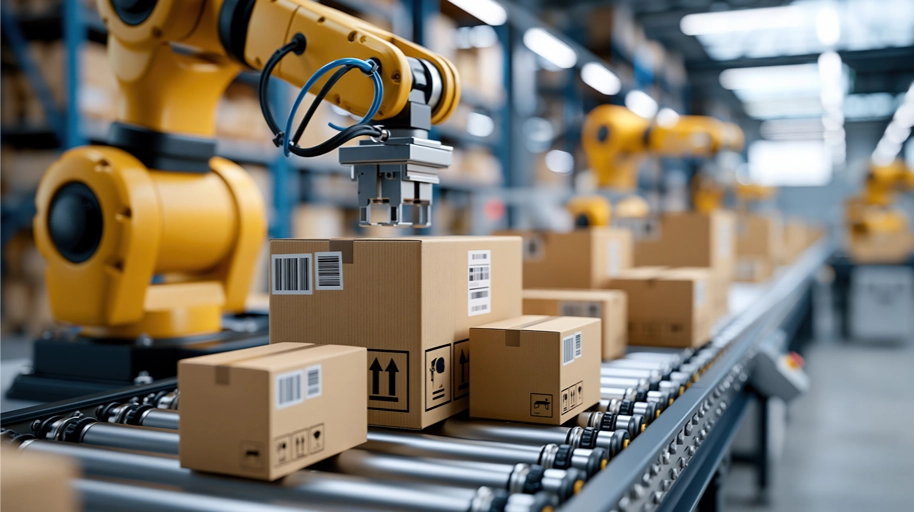
Automation can improve throughput, accuracy, safety, and scalability, but only when it is matched to the work. Robotics, automated storage and retrieval systems, conveyors, sortation, vision systems, labor-management tools, warehouse management systems, and AI-enabled planning can all help. But automation that is layered on top of unclear processes often creates a more expensive version of the same problem.
A 2026 Roadmap on Artificial Intelligence and Machine Learning for Smart Manufacturing highlighted the same broader issue that applies to warehouse automation: industrial AI faces challenges around complex data, integration with heterogeneous systems, trustworthy operation, explainability, and reliable performance in high-stakes environments. In warehousing, the practical translation is simple. Automation must be governed, measured, maintained, and connected to daily decisions.
Before scaling automation, leaders should confirm that process standards are clear, data are reliable, inventory accuracy is stable, labor roles are defined, maintenance capability is available, and exception pathways are understood. Otherwise, the company risks investing in technology that improves isolated tasks without improving end-to-end flow.
The Brooks International Perspective
From Brooks International’s perspective, the warehouse bottleneck is an execution-system challenge. The warehouse sits at the point where demand planning, inventory policy, labor scheduling, transportation, customer commitments, and technology all become physical work. If those inputs are not aligned, the building absorbs the instability.
The highest-value improvements often come from better management routines rather than isolated investment. Leaders need visibility into throughput by process, labor productivity by shift, dock performance, pick accuracy, inventory aging, space utilization, exception causes, safety performance, and customer-level profitability. They also need the cadence to act on those indicators before service and cost drift.
Brooks International helps logistics leadership teams convert warehouse operations into reliable flow. That includes clarifying accountability, strengthening supervisor routines, redesigning handoffs, improving labor planning, aligning automation to operating needs, and connecting daily warehouse performance to customer and margin outcomes.
What Logistics Leaders Should Be Asking Now
The leadership agenda should focus on whether the warehouse is managed as a controlled flow system, not simply as space and labor.
• Where is throughput constrained today: labor, slotting, dock capacity, inventory accuracy, systems, equipment, replenishment, or transportation timing?
• Can leaders see warehouse performance by customer, shift, process, supervisor, and exception category?
• Which cost increases are caused by market pressure, and which are caused by avoidable rework, congestion, overtime, or planning defects?
• Are automation investments tied to measurable improvements in throughput, accuracy, safety, and cost-to-serve?
• Does the warehouse have a clear cadence for managing space utilization, inventory aging, dock appointments, and labor deployment?
• Can the organization distinguish between available storage space and productive throughput capacity?
The Leadership Imperative
Warehousing is becoming one of the places where logistics performance either holds together or breaks apart. Labor, space, and automation are all necessary, but none of them creates value alone. Value comes from controlled flow.
For logistics CEOs, the mandate is clear: manage the warehouse as a performance system before cost pressure, inventory movement, and customer expectations turn it into the next enterprise bottleneck.