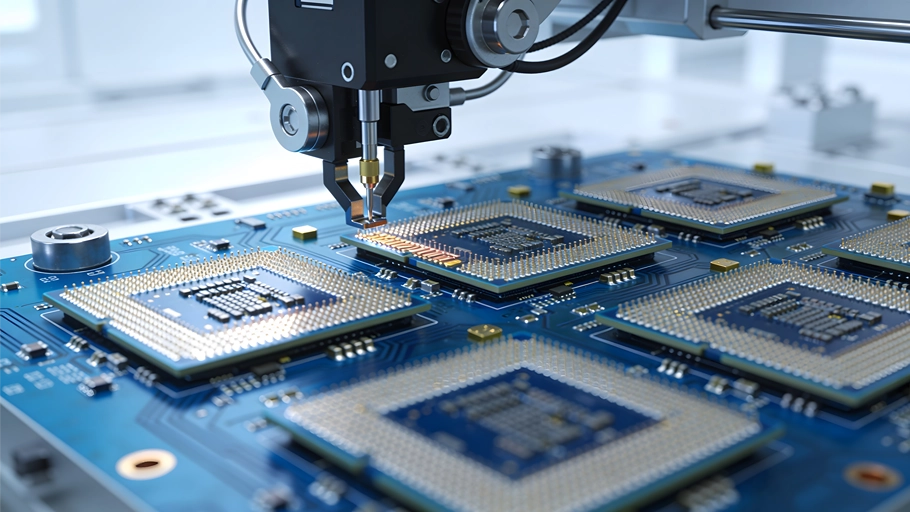

The AI Hardware Supercycle: Why Electronics Manufacturers Must Turn Demand into Deliverable Capacity
Technology manufacturing is entering a demand environment unlike the traditional electronics cycle. AI infrastructure is pulling growth through semiconductors, servers, networking equipment, power components, storage, high-bandwidth memory, printed circuit assemblies, cooling systems, and the industrial supply base that supports them.
For leaders in computer and electronic product manufacturing, the opportunity is significant, but it is not self-executing. The latest WSTS and SIA outlook points to a semiconductor market that could exceed $1.5 trillion in 2026, while AI data centers are concentrating value in increasingly complex hardware systems. That creates upside for manufacturers, but also exposes every weakness in capacity planning, supplier readiness, factory control, allocation discipline, and working-capital management.
AI hardware demand does not become enterprise value until it becomes deliverable capacity: qualified output, reliable schedules, controlled yields, disciplined allocation, margin-protected growth, and cash conversion across the electronics manufacturing system.
AI Demand Has Moved from Product Cycle to Capacity Cycle
The AI hardware boom is not limited to one product category. It is reshaping the full stack of electronics manufacturing: advanced logic, memory, networking chips, power management, storage, substrates, boards, optical interconnects, test equipment, and finished systems. A recent SIA-Deloitte analysis found that semiconductors account for more than 95% of the content value of a leading AI server rack and more than 50% of the capital expenditure required to build and operate an AI data center.
That matters because the unit economics of the sector are becoming more concentrated. A smaller number of high-value systems can drive disproportionate revenue, while a constrained base of suppliers, tools, and qualified production processes determines whether demand can be served. The operating question is not simply whether orders exist. It is whether the enterprise can turn those orders into customer commitments it can fulfill profitably.
The traditional electronics playbook assumed that demand cycles could be managed through forecast updates, purchase orders, overtime, and supplier escalation. The AI hardware cycle is different. Capacity is capital-intensive, lead times are long, supply is globally interdependent, and qualification requirements can prevent rapid substitution. The companies that outperform will be those that manage capacity as an end-to-end operating system rather than a functional planning exercise.
The Bottleneck Is System-Level Execution, Not a Single Chip
AI infrastructure depends on a full hardware ecosystem. Accelerators need advanced packaging and high-bandwidth memory. Servers need networking, power, thermal management, storage, PCB assemblies, connectors, racks, and test capacity. Data center growth depends on the ability of many specialized suppliers to move in sequence.
That creates a different kind of execution risk for electronics manufacturers. A company can have strong demand for its product and still miss shipments if a second-tier component is constrained, a packaging partner falls behind, a board supplier struggles with yield, an engineering change is not released cleanly, or test capacity cannot absorb mix changes. In AI hardware, the failure point may sit outside the four walls of the plant but still determine revenue conversion.
For CEOs, this makes supplier readiness a commercial capability. Leaders need BOM-level risk visibility, clear escalation routines, qualification alternatives, and a cadence that connects sales commitments, engineering changes, material availability, production scheduling, quality, and finance. Demand cannot be governed only through the revenue forecast; it must be governed through the physical path to delivery.

Allocation Discipline Is Becoming a Margin Control Point
When demand exceeds available capacity, allocation becomes one of the most important management decisions in the business. Which customers receive constrained product? Which orders should be prioritized because they protect strategic relationships, margin, service obligations, or future platform position? Which commitments should be delayed or renegotiated because the cost to serve has changed?
In many electronics companies, allocation decisions are still managed through late-stage negotiation among sales, operations, supply chain, and finance. That is too slow for an AI hardware market where component availability, customer urgency, and pricing power can change quickly. Allocation needs defined decision rights, value-based criteria, scenario planning, and executive visibility into the financial tradeoffs.
This is especially important because volume growth can hide margin leakage. Expedited freight, spot buys, supplier premiums, rework, overtime, engineering churn, warranty risk, and service commitments can consume the value of a high-growth order. The leadership team needs to know not only which demand is available, but which demand is profitable under real operating conditions.
Factory Performance Must Move at AI Infrastructure Speed
Technology manufacturing leaders are under pressure to ramp output while maintaining quality, yield, and reliability. That is difficult in environments with complex routing, expensive equipment, constrained labor, engineering change activity, high mix, and customer-specific configurations. Every delay in release, material movement, test, rework disposition, or shipping creates risk to customer commitments.
The highest-value improvement opportunities are often practical and operational: schedule adherence, bottleneck visibility, equipment utilization, quality escape reduction, faster disposition of nonconforming material, tighter daily management, and more reliable handoffs between engineering, production, quality, supply chain, and customer teams.
Manufacturers also need stronger launch governance. AI hardware programs frequently involve new designs, new suppliers, new process windows, new test requirements, and aggressive customer timelines. If launch readiness is treated as a checklist rather than a live operating cadence, problems emerge after capacity has already been promised. The result is firefighting, missed shipments, and margin erosion.
Working Capital Can Absorb the Upside
Rapid growth in electronics manufacturing can consume cash if it is not tightly controlled. Inventory positions grow ahead of demand certainty. Constrained components are purchased early. Suppliers require commitments. Customers change configuration requirements. Finished goods wait for missing parts, test results, or customer release windows. The P&L may show growth while the balance sheet absorbs volatility.
The challenge is not to minimize inventory everywhere. In constrained AI hardware markets, some buffer is strategic. The challenge is to place inventory deliberately against the highest-risk and highest-value points in the system. Leaders need to know which parts justify protection, which builds are exposed to stranded inventory, which suppliers require financial support, and where customer commitments should be tied to stronger commercial terms.
The companies that convert the AI hardware supercycle into durable value will protect both service and cash. They will segment demand, control inventory by risk and value, manage supplier commitments with discipline, and ensure the operating plan is visibly connected to EBITDA and free cash flow.
Customer Commitments Need a Harder Link to Financial Control
In a supercycle, the commercial organization can become the point where strategic opportunity turns into operational overload. Customers want priority, flexibility, configuration changes, expedited delivery, and long-term supply assurance. Those requests may be commercially attractive, but they must be evaluated against real capacity, supplier exposure, engineering stability, and margin impact.
Technology manufacturers need stronger links between the deal desk, S&OP, operations, finance, and the supply base. A customer commitment that looks valuable in the CRM may become less attractive after material premiums, inventory exposure, overtime, rework, warranty assumptions, service requirements, and cash timing are included. The enterprise needs a disciplined way to price and accept commitments against total cost to serve.
This does not mean slowing commercial momentum. It means ensuring that growth is accepted on terms the operating system can support. The companies that win in AI hardware will not only capture orders. They will shape orders, sequence demand, and negotiate commitments in ways that protect delivery reliability and financial performance.
The Brooks International Perspective
From Brooks International’s perspective, the AI hardware supercycle is an execution challenge as much as a demand opportunity. The market is rewarding companies that can scale, but scaling in electronics manufacturing requires a management system that can control complexity across customers, suppliers, engineering, production, quality, and cash.
The highest-value work is often inside the operating cadence: translating demand into a capacity plan, translating the capacity plan into supplier and factory commitments, translating commitments into daily execution, and translating variance into rapid corrective action. Without that structure, growth can create more activity without creating more enterprise value.
Brooks International helps leadership teams build the operating discipline required to convert market opportunity into measurable performance. In AI hardware, that means improving visibility, ownership, management cadence, and decision quality across the full path from order intake to customer delivery and cash conversion.
Brooks International’s view is that demand is only the starting point. The strategic advantage belongs to technology manufacturers that can turn demand into deliverable capacity with control, speed, and financial discipline.
What Technology Leaders Should Be Asking Now
The leadership agenda should focus on whether the organization can convert AI-driven demand into profitable, reliable, and cash-generating output.
• Which demand is truly deliverable given supplier constraints, factory capacity, quality readiness, and test availability?
• Are allocation decisions governed by enterprise value, or are they being negotiated function by function under pressure?
• Can leadership see BOM-level constraints, second-tier supplier exposure, and engineering-change risk before customer commitments are missed?
• Which growth programs are creating EBITDA and cash, and which are consuming value through expedites, inventory, rework, or supplier premiums?
• Are daily factory routines focused on the bottlenecks that determine revenue conversion, not only local functional metrics?
• Does the operating cadence connect sales demand, supply readiness, production performance, quality signals, inventory, and cash in one leadership view?
The Leadership Imperative
The AI hardware supercycle is real, but the value will not be captured evenly. Demand will reward companies that can execute with precision and expose those that scale through firefighting.
The winners will be technology manufacturers that know where capacity is constrained, where margin is at risk, where inventory is justified, and where leadership action must move faster than the customer escalation cycle.
For technology leaders, the mandate is clear: make deliverable capacity the core operating capability of the AI hardware era.