Building the AI Economy: Why Data Centers Have Become Construction’s Execution Test
The construction and engineering industry is being pulled into the center of the artificial intelligence economy. Data centers are no longer a niche category of commercial construction. They are rapidly becoming strategic infrastructure: capital-intensive, schedule-sensitive facilities that require power availability, electrical sophistication, mechanical reliability, equipment coordination, and commissioning discipline at a scale many markets were not built to support.
The growth signal is difficult to ignore. Recent construction-spending commentary reported that U.S. data center construction reached an annualized $50.7 billion in April 2026, up 28% year over year, and briefly exceeded public spending on transportation structures. The Associated General Contractors of America and Sage also reported that data centers and power projects were the two clearest bright spots in an otherwise more cautious 2026 construction outlook.
For Construction & Engineering CEOs, the question is not simply whether the data center market will grow. The question is whether firms can convert that demand into profitable, predictable delivery while the same labor, materials, equipment, power, and specialty-trade resources are being pulled across multiple high-growth infrastructure categories.
Data center demand is not only increasing construction volume; it is testing whether the industry can scale field execution, specialty labor, and commissioning discipline fast enough to deliver power-ready capacity.
Data Centers Are Compressing the Construction Execution Cycle
AI infrastructure demand moves faster than traditional construction planning cycles. Hyperscale owners and developers are trying to bring capacity online quickly because digital demand, cloud migration, and AI workloads are expanding at a pace that does not wait for conventional project delivery. That creates a major challenge for contractors and engineering firms: the customer expectation is speed, but the delivery environment is constrained by labor scarcity, long-lead equipment, utility interconnection timing, permitting, site infrastructure, and commissioning complexity.
This is where data centers differ from ordinary building programs. A delayed office building may create financial pressure for the owner. A delayed data center may constrain revenue for a technology platform, delay customer commitments, and create ripple effects across power, fiber, equipment suppliers, and regional economic-development plans. The project becomes part of a larger capacity race.
For contractors, this raises the cost of weak planning. Rework, late engineering packages, incomplete submittals, poor trade coordination, equipment delays, and unresolved field constraints can quickly consume margin. The work is attractive, but the operating tolerance is low.
The Bottleneck Is Often in the Trades
Data center construction is especially dependent on electrical, mechanical, controls, commissioning, and specialty trade execution. The work requires high technical competence, tight sequencing, and a workforce that can perform safely and consistently under schedule pressure. At the same time, data center demand is competing with power generation, transmission, industrial, semiconductor, manufacturing, and infrastructure projects for many of the same skilled resources.
Reuters has reported that the data center buildout is worsening shortages of power and construction workers, with approximately 41% of the current construction workforce projected to retire by 2031 and the United States requiring roughly 507,000 additional workers in transmission, grid infrastructure, and energy construction by 2030. That creates a labor-capacity problem for the entire project ecosystem, not just the utility sector.
The implication is clear: construction leaders cannot solve this challenge only by recruiting more people. They must improve the productivity, coordination, utilization, and supervision of the workforce already on the job. Field labor becomes a strategic capacity asset.
Power Readiness Is Part of the Construction Problem
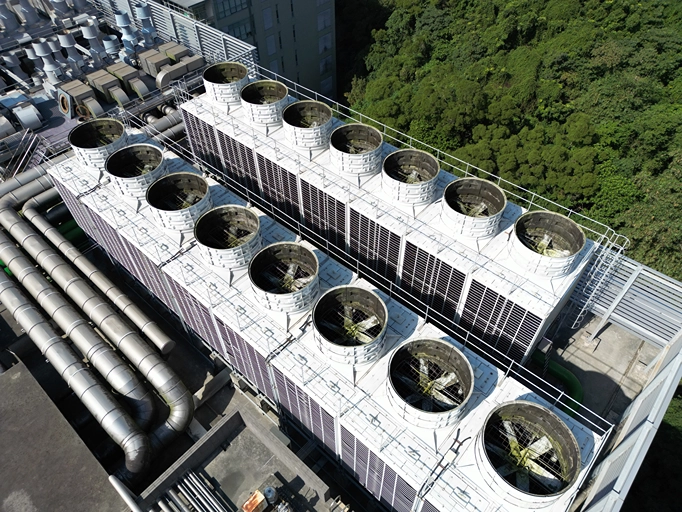
The defining constraint in many data center programs is not the building shell. It is power. Utility connection timelines, substation capacity, switchgear availability, backup generation, transformers, cooling systems, commissioning windows, and energy redundancy all influence when the facility can actually serve load. That means the construction schedule must be integrated with utility coordination, equipment procurement, commissioning milestones, and owner operating requirements from the beginning.
This creates a more complex execution environment for building contractors, heavy/civil teams, specialty trades, engineers, and owners. Civil work, site infrastructure, power equipment, cooling systems, controls, and commissioning cannot be managed as separate workstreams that happen to meet at the end. They must be managed as one critical-path system.
The organizations that outperform will be those that understand where the true constraints sit and manage them visibly. A project can look on track in the field while the real risk is buried in equipment status, utility energization, commissioning readiness, or unresolved design integration.
For CEOs, this changes how projects must be governed. The traditional separation between construction progress, procurement reporting, utility coordination, and commissioning status is no longer sufficient. Leadership needs a single operating view of what is required to make capacity usable, not merely what has been installed.
High-Growth Work Can Still Destroy Margin
Data center demand creates revenue opportunity, but it also creates risk. Contractors may be tempted to chase volume, expand capacity too quickly, or accept aggressive schedules without the operating structure required to deliver. In a market where high-value projects are available, the greatest danger is assuming backlog quality is automatically high because the end market is attractive.
Margin is protected before the project starts and controlled every day thereafter. Firms need strong go/no-go discipline, realistic labor loading, procurement visibility, design coordination, subcontractor alignment, schedule governance, and commercial controls. Without those routines, the business can win the work and still lose the economics.
The risk is amplified by the repetitive nature of large programs. A weak project-start process, poor constraint visibility, or inconsistent supervisor routines can be replicated across multiple halls, campuses, or geographies. The same is true in reverse: when the operating model is strong, lessons learned, standard work, and production controls can compound across the portfolio.
Data centers are therefore not only a market opportunity. They are an execution test. They reveal whether the organization can scale without losing control.
The Brooks International Perspective
From Brooks International’s perspective, the data center boom is a construction execution-capacity challenge. The market is asking contractors and engineering firms to deliver more technical work, with tighter schedules, through constrained labor and supply chains, while customer expectations for speed and reliability continue to rise.
The highest-value opportunities are often inside the operating model itself: improving field productivity, aligning engineering and procurement with the construction schedule, tightening trade coordination, increasing supervisory effectiveness, reducing rework, improving commissioning readiness, and strengthening the management cadence around constraints.
For building contractors, heavy/civil teams, specialty trades, and engineering firms, this requires structure. Labor plans must be tied to the schedule. Procurement risks must be visible before they affect the field. Supervisors must have clear production expectations and escalation paths. Commissioning requirements must be built into the operating cadence before the end of the project.
Brooks International helps organizations connect executive intent to field execution. In this environment, that means creating the structure, routines, accountability, and performance visibility required to convert data center demand into profitable delivery. The companies that win will not simply have access to high-growth projects. They will have the operating discipline to deliver them.

What Construction & Engineering Leaders Should Be Asking Now
The immediate leadership agenda should focus on the controllable execution system behind data center growth:
- Which labor categories, trade partners, equipment packages, or utility dependencies are most likely to constrain delivery?
- Are project schedules built around true critical-path constraints, or around optimistic assumptions that have not been tested against field capacity?
- Does the organization have real-time visibility into procurement, engineering, submittals, commissioning readiness, and trade productivity?
- Are supervisors equipped with the routines and standards needed to control daily production, quality, safety, and constraint removal?
- Is data center backlog being priced and staffed based on actual operating capacity, or based on revenue opportunity alone?
- Can the company scale delivery without increasing rework, claims, safety exposure, or margin leakage?
The Leadership Imperative
The AI economy is creating one of the most visible growth opportunities in construction and engineering. But the winners will not be defined by backlog alone. They will be defined by the ability to bring technical, power-ready, high-reliability facilities online with speed, discipline, and predictable economics.
For CEOs, the mandate is to treat data center work as an enterprise execution challenge. That means aligning market strategy, estimating, engineering, procurement, field labor, specialty trades, commissioning, and financial controls into one management system.
In data center construction, capacity is not only measured in square feet or megawatts. It is measured in the organization’s ability to execute.